

TargetModeler

Synthetic Data Engine for EO/IR Vision
Models

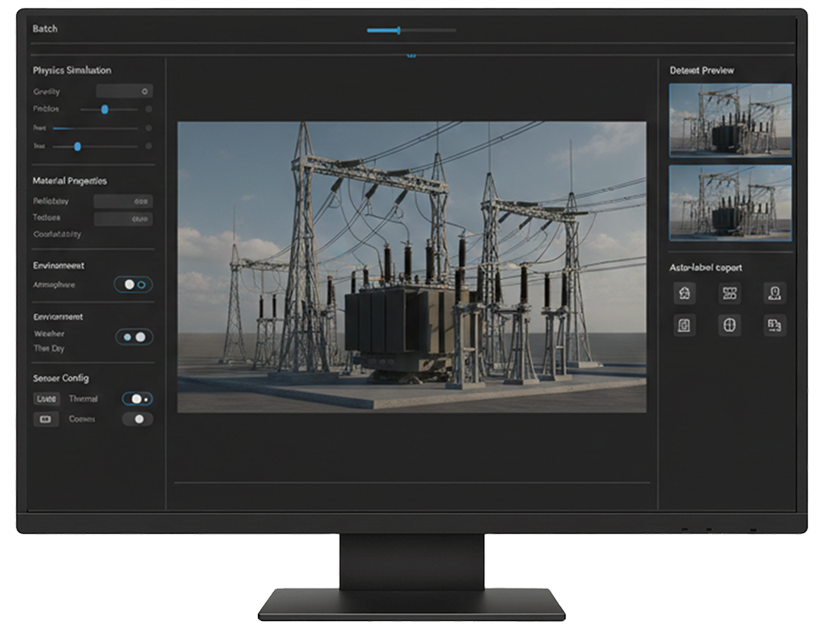
Build robust vision models with balanced, labeled EO/IR data—no cloud, no manual tagging.

Why TargetModeler

Collecting real imagery is slow, costly, and often misses edge cases. TargetModeler gives AI teams controlled, repeatable datasets so models improve without waiting on field collection.

Minutes to thousands of images

Generate mission-realistic EO/IR sets in under 10 minutes.

Clean, auto labels

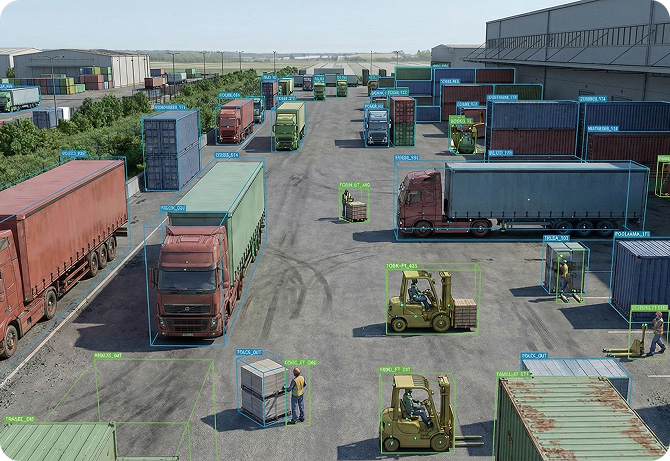
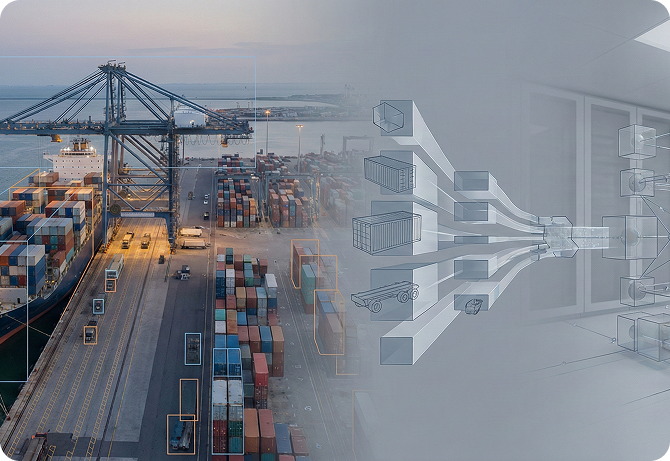
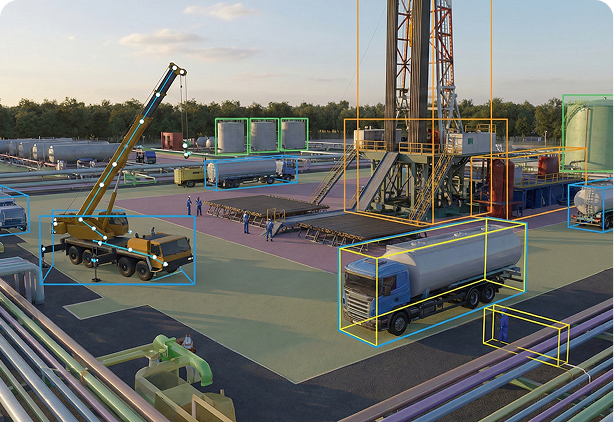
Boxes, polygons, masks, keypoints, 3D cuboids produced at scale.

Balanced by design

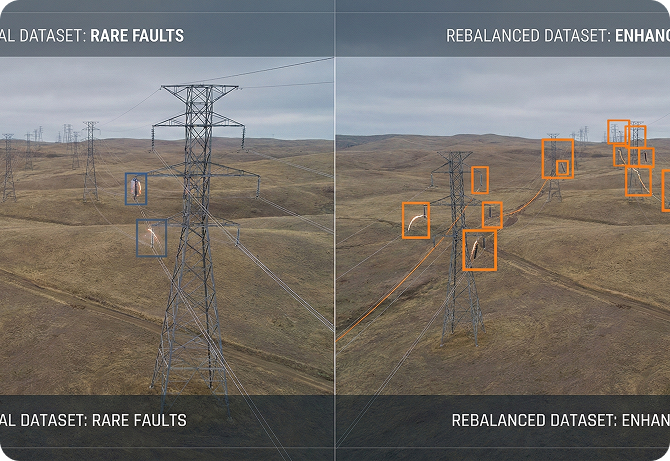
Control class balance, ranges, poses, backgrounds, and sensor effects.

Operator-ready workflow

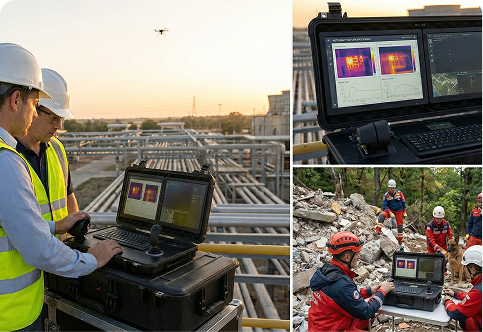
No code required; operators and engineers can build, adjust, and export datasets without a data-science queue.

Physics-based, not guesswork

Rendering is driven by physics-based models for controllable, repeatable results.

What TargetModeler can do

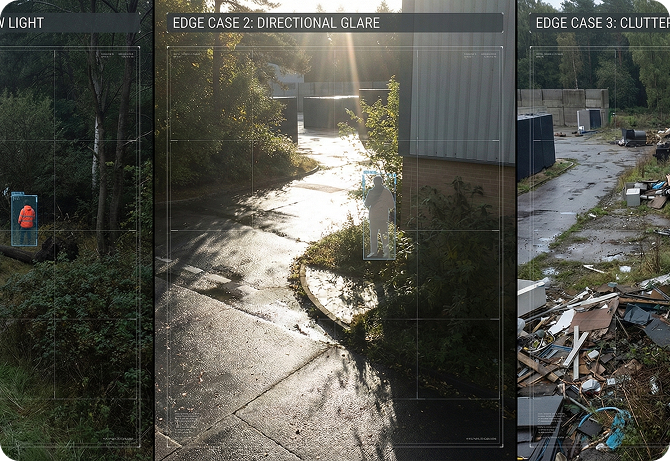
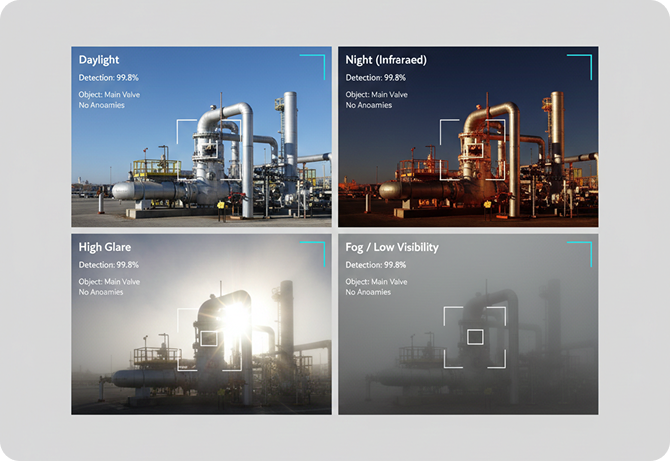
Cover edge cases on demand

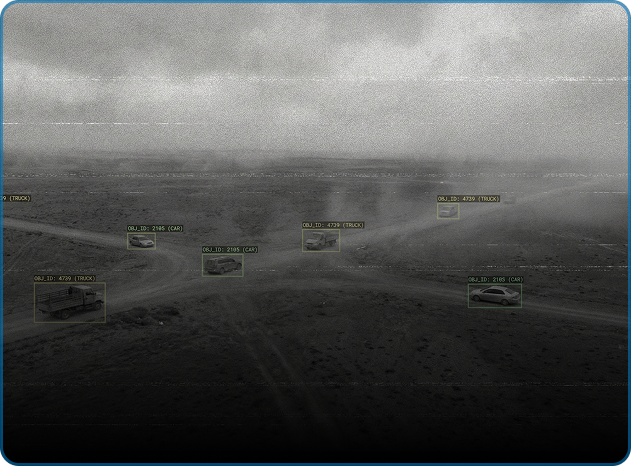
Occlusion, low light, glare, clutter, small objects, and look-alikes.

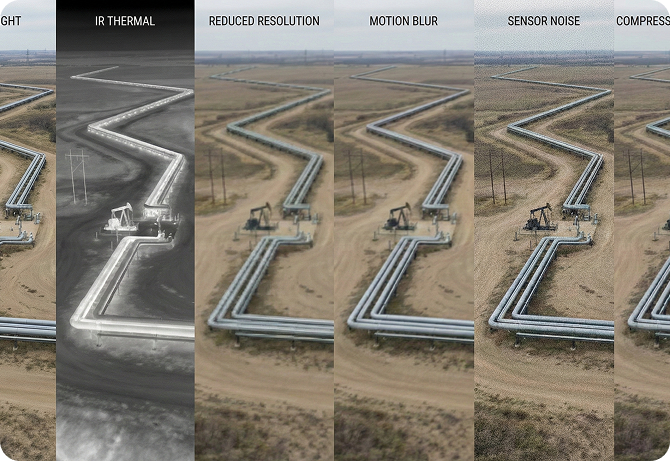
Mirror operational sensors

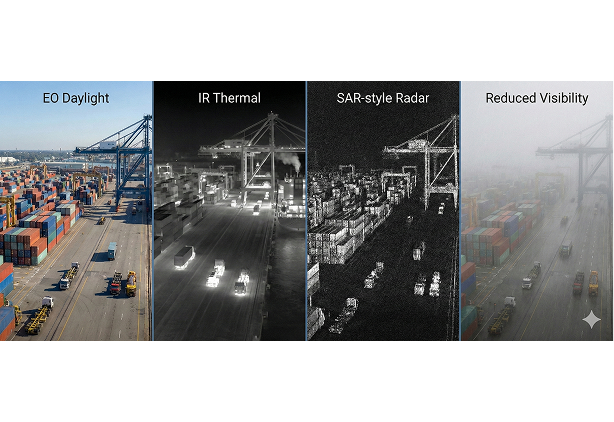
Configure EO/IR, SAR, noise, blur, compression, and optics limits.

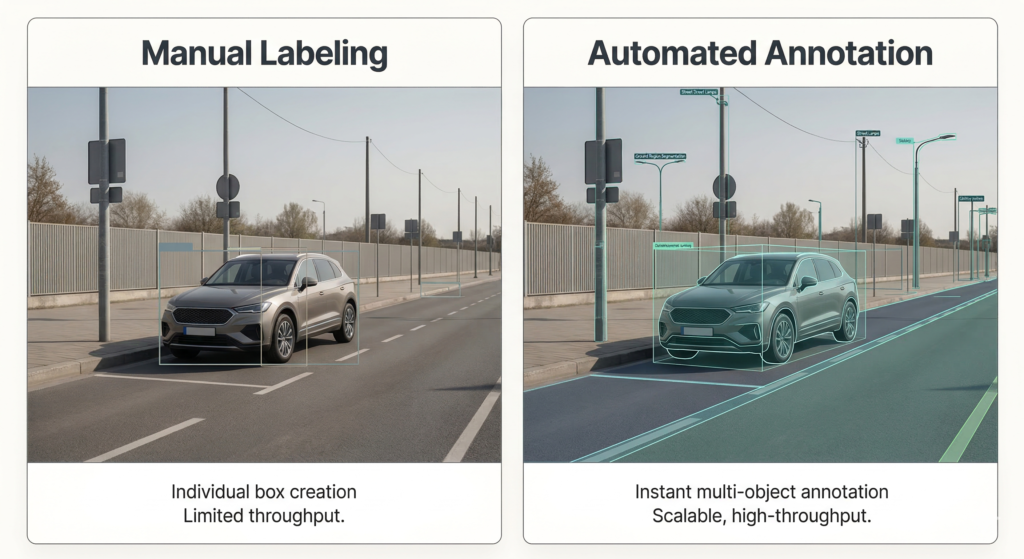
Auto-label at scale

Generate rich annotations and QA summaries with each dataset.

Rebalance quickly

Adjust class ratios and hard negatives without rebuilding the entire dataset.

Export and train

Push datasets into existing pipelines (COCO, YOLO, MMDet, custom) and track model performance changes over time.

The TargetModeler stack

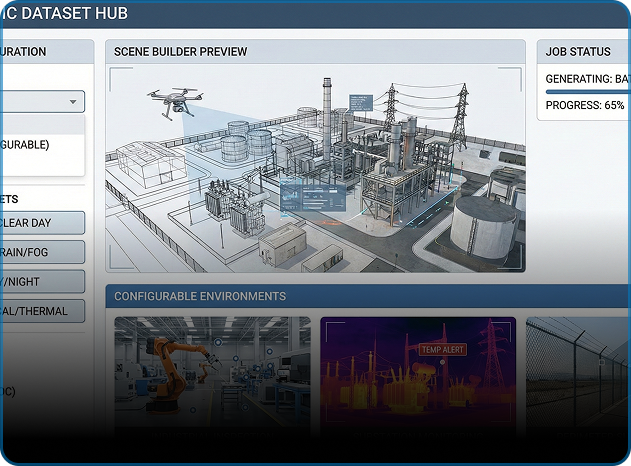
Scene Builder

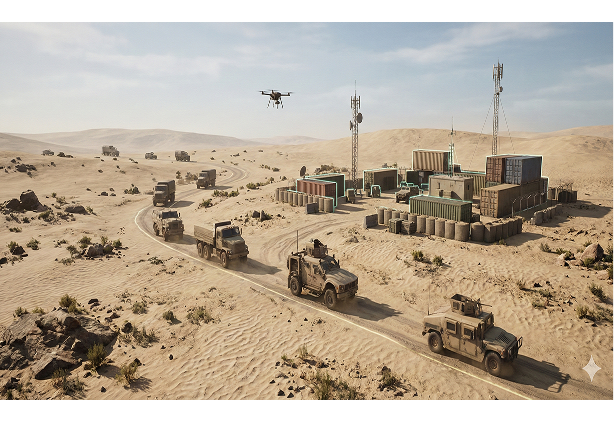
Drag-and-drop assets, terrains, routes, behaviors, and injects.

Sensor Forge

Physics-based EO/IR/SAR effects with parameter presets that can be saved.

Label Engine

Auto boxes, polygons, masks, keypoints, 3D cuboids; QA reports included.

Dataset Manager

Balance controls, splits, versioning, and export formats.

Why teams trust TargetModeler

Documented model gains

Prior projects have shown reductions in false-positives and stronger detection/ID performance before live evaluations.

Repeatable by design

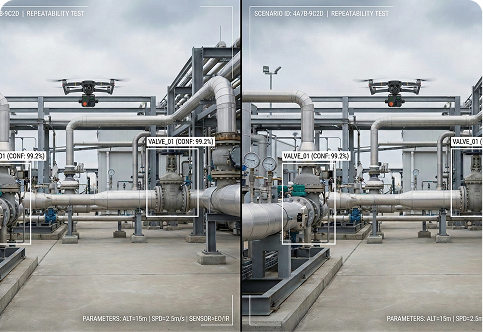
The same scenario inputs produce the same data, so improvements are measurable.

Fits your stack

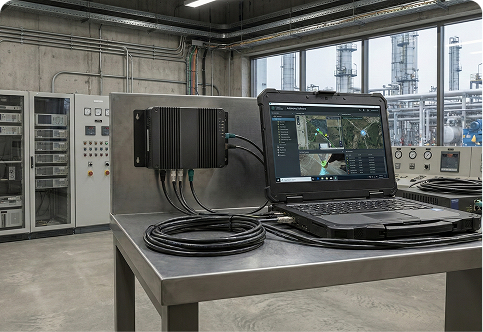
Works with on-prem workflows and secure environments; no internet connection required.

Operational impact

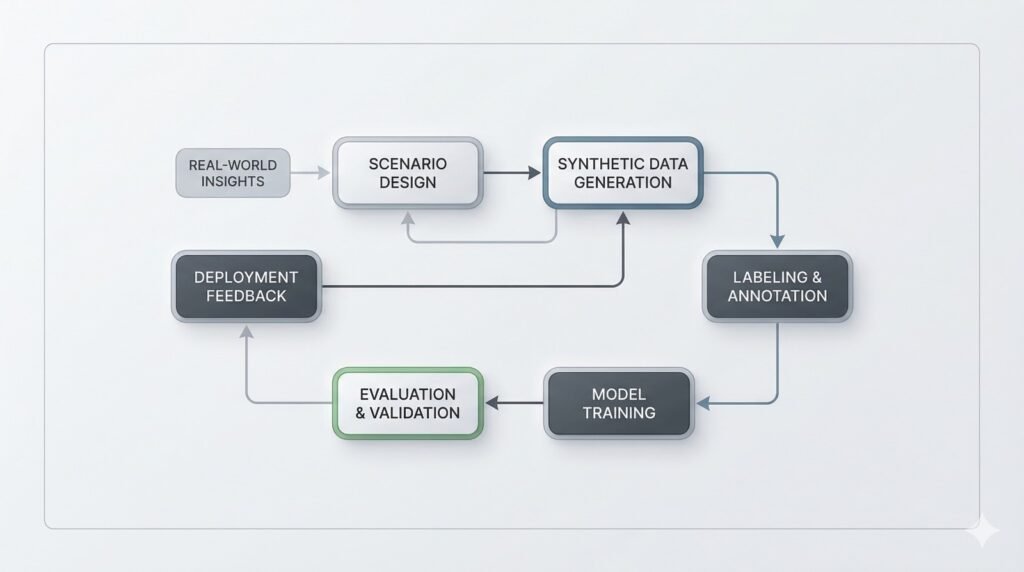
Model improvement cadence

Model updates increasingly driven by synthetic runs between live collections, reducing dependence on new field data.

Performance in hard conditions

Precision and recall strengthened in night, glare, clutter, and small-target scenarios when tuned to program requirements.

Labeling efficiency

Labeling and relabeling effort shifted from manual tools into automated annotation workflows.

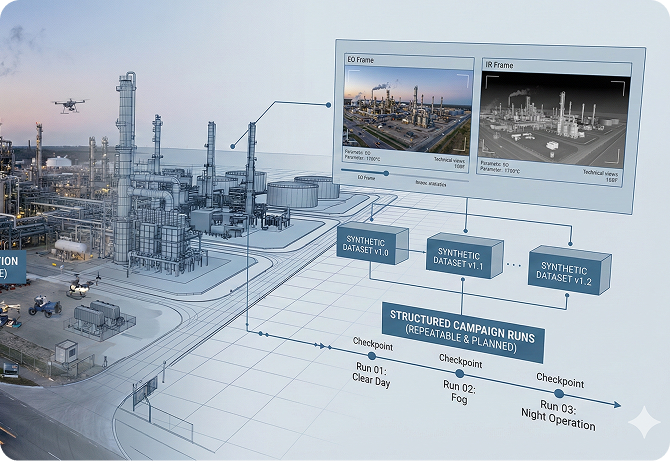
Test and data planning

Data collection and re-test effort moved from ad hoc live events into planned synthetic campaigns that can be repeated and extended.

Defense & commercial use cases

Defense

ATR/ISR target sets, look-alike discrimination, EW-degraded conditions.

Public safety & critical infrastructure

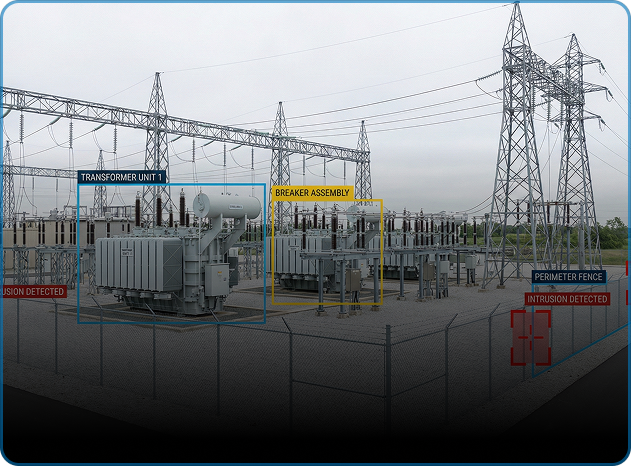
Perimeter, substation, and pipeline scenario data.

Industrial

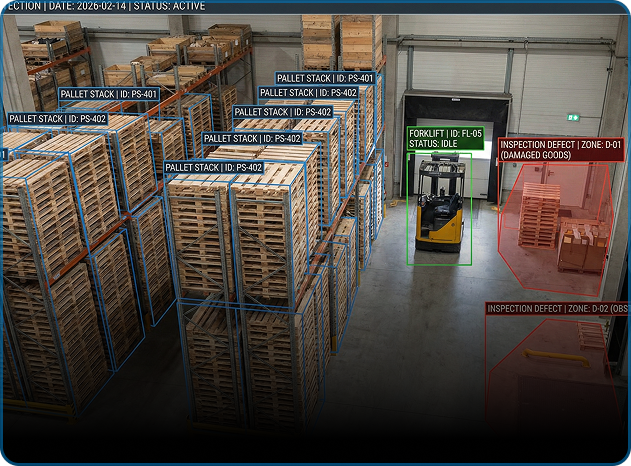
Yard logistics, warehouse detection, inspection defects.

Platform OEMs & system integrators

Customer-specific datasets aligned with training and acceptance criteria.

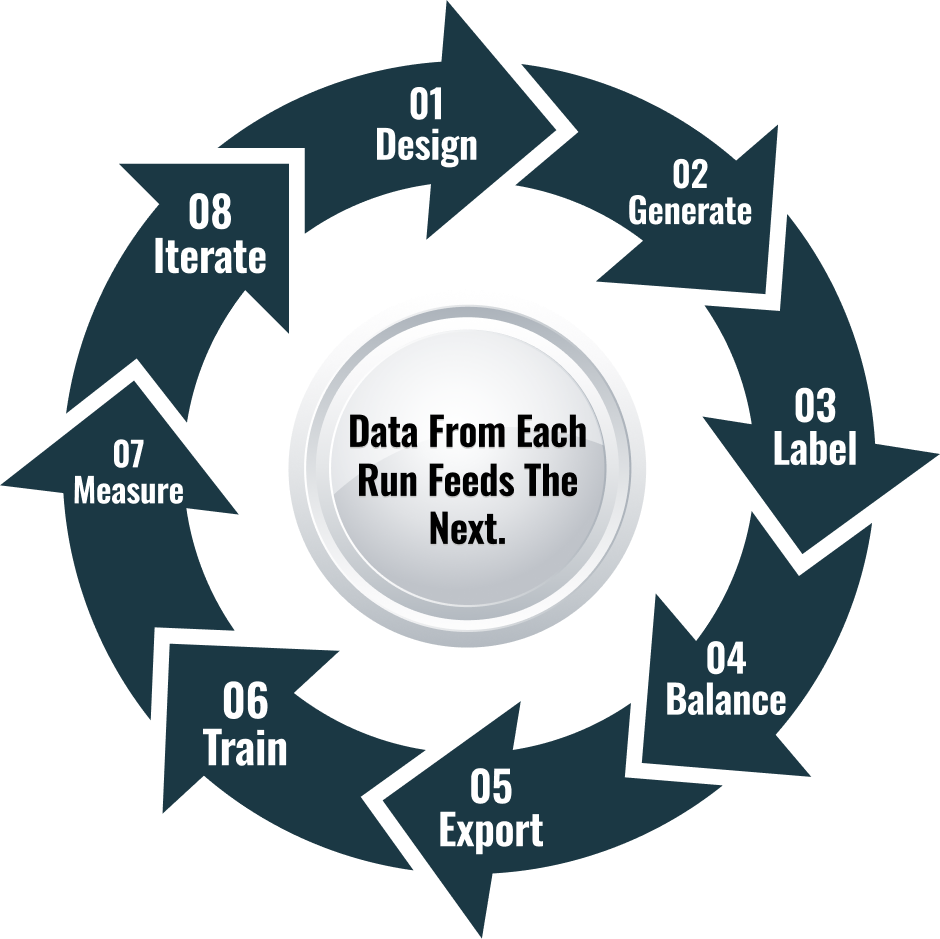
How teams use TargetModeler

- 01

Build

- 02

Rehearse

- 03

Review

- 04

Balance/split

- 05

Export

- 06

Train

- 05

Measure

- 06

Iterate

Pricing & deployment

Start with a single project and expand as requirements grow. On-prem install with optional cloud-assist.

Contact SensorOps for deployment options and pricing.

Program impact at a glance

< 10 minutes

to generate an initial 1,000 labeled images in a typical configuration

Manual labeling time

reduced significantly through automatic annotation

Edge-case coverage expanded

across conditions such as night, glare, clutter, and small targets

Common questions

Yes, CAD models and terrain can be brought in and tagged once for reuse.

Yes, processing and decisions run on device.

Yes, processing and decisions run on device.

Yes, processing and decisions run on device.

Scroll to Top